
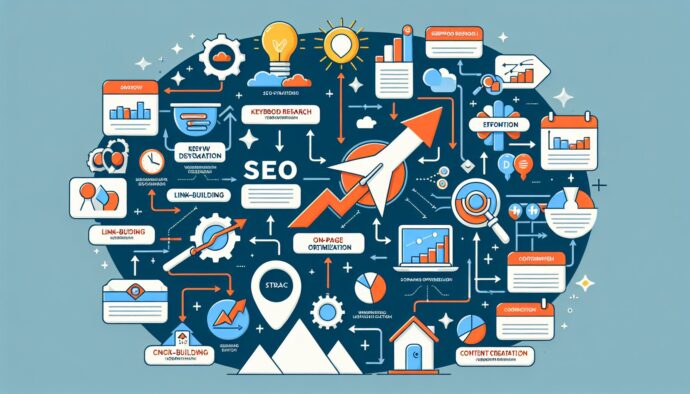
Business owners can grow organic traffic and outrank competitors by combining on-page optimization, technical SEO, and off-page link building. This guide covers the core SEO strategies that improve search engine rankings, attract targeted visitors, and build brand credibility online.
Why SEO Matters for Business Owners
Search engines like Google, Bing, and Yahoo rank websites using algorithms that weigh multiple factors. SEO shapes a website so it meets those ranking criteria, which leads to higher visibility in search results and a steady flow of organic traffic. Businesses of every size benefit when they invest in SEO, including:
Increased organic traffic
The higher a website ranks in search engine results pages (SERPs), the more visibility and traffic it receives. Optimizing for search engines aligns your offerings with the queries potential customers use to find products or services in your industry.
Enhanced user experience
SEO covers techniques like improving responsiveness, tightening page load times, and refining overall usability. Visitors who have a positive experience stay longer, bounce less, and convert at higher rates.
Brand credibility and authority
Ranking on the first page of search results builds trust. Customers tend to perceive top-ranked websites as more reputable, and a strong presence through SEO positions businesses as industry experts.
The role of keywords
Keywords sit at the core of SEO and determine how well a website matches user intent. LSI (Latent Semantic Indexing) keywords help search engines understand content context, which supports ranking on relevant queries. Choose a mix of short-tail and long-tail keywords to optimize content for organic discovery.
Effective SEO Strategies for Business Owners
1. On-page optimization
On-page optimization improves individual web pages so they rank better in search engines. The main elements include:
Keyword research and optimization
Run thorough keyword research using available tools to identify relevant search terms in your industry. Place these keywords strategically across meta tags, headers, URLs, image alt tags, and body text.
High-quality content creation
High-quality, informative, and engaging content drives SEO success. Produce well-researched articles, blog posts, infographics, and videos that answer what your audience is actively searching for, and use LSI keywords generously.
URL structure and format
Keep URLs concise, descriptive, and built around relevant keywords so search engines can identify the page topic and users can understand the content at a glance.
2. Technical SEO
Technical SEO focuses on a website’s infrastructure and performance. The key areas to address:
Website speed and responsiveness
Optimize the site to load quickly across devices. Slow pages raise bounce rates and hurt both user experience and rankings. Improve speed through image optimization, caching, and a content delivery network (CDN).
Mobile optimization
Most internet searches now happen on mobile devices, so a mobile-friendly site is critical. Responsive design adapts layouts to different screen sizes for a consistent browsing experience.
Site structure and navigation
Clear site structure and intuitive navigation help visitors find information quickly and make crawling easier for search engines. Use hierarchical categories, breadcrumbs, and XML sitemaps so engines can index content accurately.
3. Off-page optimization and link building
Off-page optimization builds visibility and authority across the wider web. Effective methods include:
Link building
Earn high-quality, authoritative backlinks from reputable websites in your industry. A diverse and natural backlink profile signals that your content is relevant and valuable.
Guest blogging
Publish guest articles on influential blogs or websites in your industry. Guest blogging reaches a new audience, builds authority, and strengthens the backlink profile.
Social media engagement
Social media plays a substantial role in online visibility. Shareable content, industry insights, and active participation in relevant communities drive traffic from social platforms and may also support search engine rankings.
Building Long-Term SEO Success
SEO is no longer optional for businesses that want sustainable growth. Combining on-page optimization, technical SEO, and off-page link building brings targeted organic traffic, stronger brand credibility, and better search rankings than competitors.
Long-lasting SEO results take time, patience, and ongoing effort. Stay current with search engine algorithm changes, monitor website analytics regularly, and adjust strategies as needed to keep the site visible, user-friendly, and competitive.
Implementation of an effective SEO strategy may require technical expertise. Consider seeking professional assistance in optimizing your website for incredible results.
Related coverage
- #The Ultimate SEO Guide: What Business Owners Need to Know in 2024
- The Ultimate SEO Guide: What Business Owners Need to Know in 2024